
The short answer
People are passive aggressive when they feel angry or resentful but don’t feel safe or able to say so directly. The anger comes out sideways instead: in delays, sarcasm, silence, backhanded compliments or tasks done badly on purpose. Common reasons are a fear of conflict, a sense of having little power, and a childhood where open anger was punished. The best response is to calmly make the indirect message direct, ask about it without accusation, and keep agreements clear and in writing.
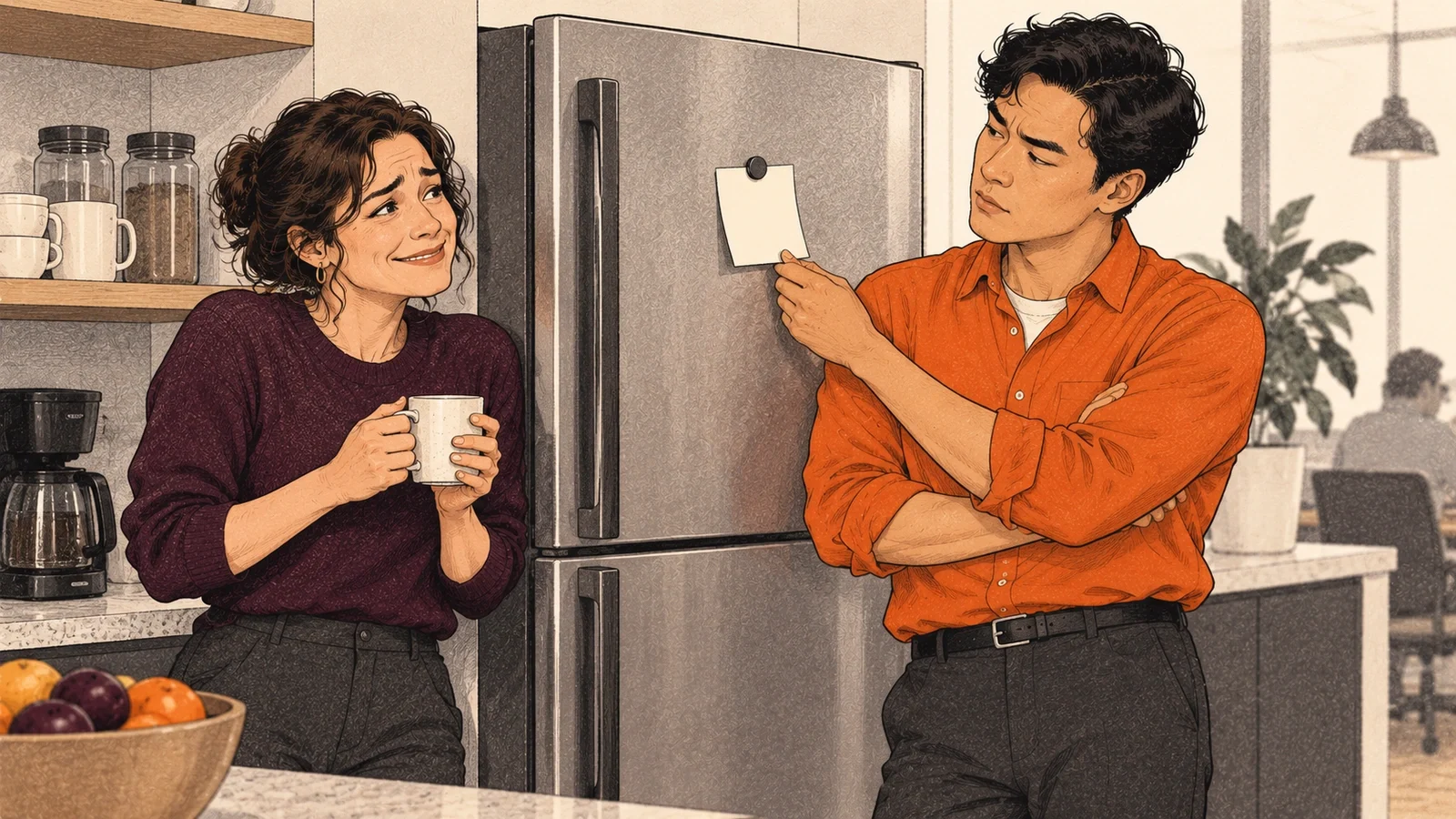
The note on the office fridge says: “Some of us actually clean up after ourselves 🙂 :)”. Two smiley faces. Nobody is named. Everyone knows exactly who it’s for, and nobody, least of all the person who wrote it, will ever admit that it’s an attack.
That’s passive aggression in a nutshell: a hostile message delivered in a way that keeps the sender deniable. “I was only reminding everyone.” “I said it was fine.” “I didn’t mean anything by it.” The anger is real. It just never shows up under its own name.
If you work with someone like this, or live with them, it can be more tiring than open conflict. With someone who shouts, at least you know where you stand. With passive aggression, you spend your energy wondering whether you’re imagining it.
You’re probably not.
What passive aggression looks like
The term goes back to the US Army in the Second World War, when a psychiatrist described soldiers who resisted orders not by refusing them but by procrastinating, sulking and doing things inefficiently. The modern version is the same idea, adapted to offices and kitchens:
- Agreeing and not doing. “Sure, I’ll get that to you,” and then nothing, followed by mild surprise that you expected it.
- Strategic slowness. The reply that comes three days late, the task that takes mysteriously longer when it’s for you.
- Backhanded compliments. “You’re so brave to wear that.” “Nice work, for a first draft.”
- The pointed reminder. “Per my last email.” “As I mentioned before.” “Just circling back again.”
- Sarcasm with an exit. A cutting remark followed by “I’m joking, relax.”
- Silence. Going cold, giving one-word answers, while insisting nothing is wrong.
- Doing it badly on purpose. Completing a task you asked for in a way that makes sure you won’t ask again.
One of these, once, doesn’t make someone passive aggressive. Everyone writes a slightly sharp “per my last email” occasionally. The pattern is what matters: a steady habit of expressing irritation in ways that can always be denied.
Why people are passive aggressive
They don’t feel safe being angry out loud
This is the heart of it. Passive aggression is what anger looks like when someone believes direct anger is dangerous. Maybe they’ll be seen as difficult. Maybe they’ll lose the argument. Maybe the other person has more power and can make their life hard. So the anger goes underground, and comes out in forms they can deny.
They grew up where open anger wasn’t allowed
Many passive aggressive adults grew up in homes where saying “I’m angry” got them punished, mocked or ignored. Some grew up with a parent who did exactly this: the slammed cupboard, the cold dinner, the “I’m fine” that meant the opposite. Children copy what they see. If the only model of disagreement you had was the indirect one, that’s the language you speak as an adult.
They feel powerless
Passive aggression is often a weapon of people who feel they have little control. An employee who can’t refuse a task can still do it slowly. A partner who feels unheard can still go quiet. When you can’t say no openly, a delayed, half-hearted yes is a way of saying it anyway.
It works, at least in the short term
Being passive aggressive lets someone express hostility while avoiding the cost of a real argument. They get to feel the satisfaction of a dig without having to defend it. Every time it goes unchallenged, the habit gets a little stronger.
They don’t fully know they’re doing it
Some people are genuinely unaware. They feel resentment, they don’t recognize it as such, and it leaks out in tone and timing. If you asked them directly whether they were annoyed, they might honestly say no, and then realize later that they were.
What passive aggression isn’t
It’s worth being careful with the label. A colleague who is slow to reply may simply be overloaded. A short email may be written by someone who writes short emails to everyone. A partner who is quiet may be tired, not punishing you. Passive aggression is about hidden hostility, and you can’t always see what’s hidden.
A good test is whether the behavior is directed: does it happen with you, or with a particular kind of request, and not elsewhere? Does it show up after a disagreement? Is there a pattern of things going wrong in ways that just happen to cost you? If so, you’re probably reading it right.
How to respond to passive aggressive behavior
The instinct is either to ignore it or to hit back with something equally sharp. Neither tends to work. Ignoring it tells the other person the method is safe. Hitting back gives them a reason to feel wronged, and lets them say, truthfully, that you were the one who got angry.
What works better is gently pulling the hidden message into the open.
Name the behavior, not the motive
Describe what happened, without telling them why they did it. “I noticed the report came back without the changes we agreed on” is hard to argue with. “You’re doing this to undermine me” invites an easy denial and a fight.
Ask a real question
Give them a door to say the thing directly. “It seemed like something bothered you in the meeting. Did I get that wrong?” Ask it calmly, in private, and leave room for the answer. Sometimes there’s a real grievance, and once it’s said out loud, it can be dealt with. Sometimes they’ll deny it, and that’s fine too. You’ve shown that you notice, and that direct is an option.
Respond to the words, not the tone
When someone says “Fine, whatever you think is best,” in a tone that clearly means the opposite, you can take them at their word: “Great, I’ll go ahead then.” Or you can invite the real answer: “It sounds like you’re not sure about it. What would you do differently?” Either way, you stop playing the guessing game.
Make agreements explicit
Passive aggression thrives in vagueness. If someone tends to agree and then not deliver, close the gap: “So you’ll send me the figures by Thursday at noon. I’ll put it in the project notes.” It isn’t about catching them out. It’s about removing the gray area where hostility hides.
Don’t reward the method
If sulking gets someone their way, they’ll keep sulking. Stay friendly, stay steady, and keep responding to what is said out loud rather than to what is hinted. Over time, people learn that the indirect route doesn’t get them anywhere with you.
If you recognize yourself
Most of us do it sometimes. The good news is that the fix is simple to describe, even if it isn’t easy: notice when you feel irritated, and say so in a sentence, early, before it builds up. “I’m annoyed that this keeps landing on me” is uncomfortable to say, but it’s the start of a conversation that can actually solve the problem. The sideways version never does.
When it’s part of something bigger
Persistent passive aggression in a close relationship can be part of a wider pattern of control, along with silent treatments, guilt and punishment. If you find yourself constantly walking on eggshells, or feel that nothing you do is right, that deserves attention beyond a single conversation. Our guide to why people give the silent treatment looks at one of the most common forms, and the broader guide to dealing with difficult coworkers covers when to involve a manager or HR at work.
Frequently asked questions
What is the main cause of passive aggressive behavior?
Usually anger or resentment that someone doesn’t feel able to express openly, often because they fear conflict, feel powerless, or grew up in a place where direct anger was punished.
Do passive aggressive people know what they are doing?
Some do and choose it because it lets them express hostility while staying deniable. Others are genuinely unaware that they’re annoyed, and the feeling leaks out in their tone and timing.
How do you respond to a passive aggressive comment?
Stay calm and make it direct. Describe what happened without guessing at motives, and ask a real question, such as “It sounded like something bothered you. Did I read that right?”
Is passive aggressive behavior a mental illness?
No. It was once described as a personality disorder, but it was dropped from the main psychiatric diagnostic manual. Today it’s seen as a behavior pattern that many people show to some degree, not a diagnosis.